
 Resources
Sober Living Homes Explained
Published On 01-08-2026
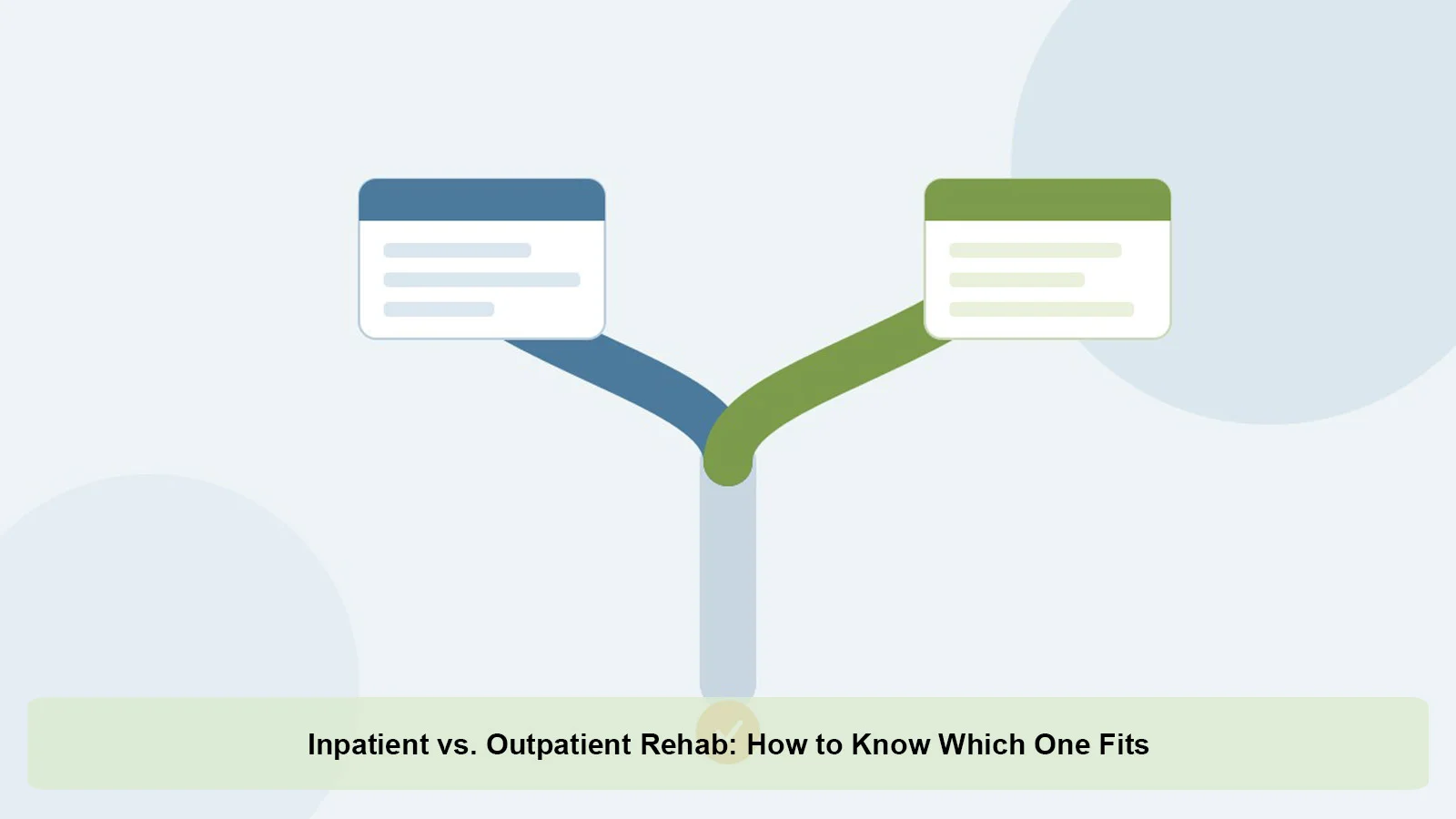
This is usually one of the first forks in the road, and it gets decided too quickly either by whatever a single admissions call recommends, or by assuming higher intensity always means better odds. Neither shortcut serves people well. The right level of care depends less on how "serious" a situation feels and more on a specific set of clinical and practical factors. Here's how to actually think through it.
Inpatient (residential) treatment means living at the facility full-time, typically for 28 to 90 days, with 24-hour structure, supervision, and access to medical staff.
Outpatient treatment covers a range of intensities from a few hours several days a week (intensive outpatient, or IOP) to a single weekly therapy session (standard outpatient) while the person continues living at home and, often, working or attending school.
There's also a middle tier worth knowing: partial hospitalization (PHP), which is full-day treatment without overnight stays, sometimes called "day treatment."
Certain substances carry real medical risk during withdrawal alcohol and benzodiazepines in particular can cause seizures or other dangerous complications without supervision. If medical detox is needed, that alone typically points toward an inpatient or medically supervised setting, at least for the initial stabilization period, regardless of other factors.
Outpatient treatment only works if the environment someone returns to each day isn't actively undermining recovery. Relevant questions: Is there ongoing substance use in the household? Is the person around the same triggers and relationships that were part of the problem? A genuinely supportive, substance-free home environment makes outpatient far more viable than an unstable one.
Longer-term, more severe substance use disorders generally benefit from the fuller structure of residential treatment, at least initially. Shorter-term or lower-severity use, particularly when caught earlier, often responds well to intensive outpatient care without requiring a full residential stay.
Significant, unmanaged depression, anxiety, trauma, or other psychiatric conditions alongside substance use often call for the more intensive, integrated care residential treatment can provide particularly if there's any safety risk involved.
This is a real, legitimate factor not a reason to avoid treatment altogether. Outpatient programs exist specifically to let people keep working or parenting while still receiving structured care. For some people, especially those with strong outpatient support systems, this is a genuinely appropriate and effective path, not a compromise.
Someone who has already tried outpatient care without success may benefit from stepping up to residential treatment this time. Conversely, someone completing a residential stay is often stepping down into outpatient care as the next phase these levels aren't necessarily an either/or choice; they're frequently sequential.
| Situation | Often Points Toward |
|---|---|
| Risk of dangerous withdrawal symptoms | Medical detox, then reassess level of care |
| Unstable or unsafe home environment | Residential treatment |
| Significant co-occurring mental health crisis | Residential or PHP |
| Stable home, moderate severity, strong support system | IOP or standard outpatient |
| Completed residential treatment, need step-down care | PHP or IOP |
| Cannot take extended time away from work or caregiving | Evening/weekend IOP options |
This isn't a diagnostic tool it's a starting point for the conversation with a clinician, who should be assessing your specific situation rather than defaulting to whatever level of care is most profitable for a given facility to sell.
Because residential treatment is more expensive, some facilities have a financial incentive to recommend it even when a clinically appropriate outpatient option exists. A trustworthy assessment should reference actual clinical criteria (many programs use the ASAM criteria, a widely recognized standard for determining appropriate level of care) rather than a generic sales pitch. If a recommendation feels disconnected from your actual circumstances, a second opinion from an independent clinician is a reasonable step.
One of the more common misconceptions is that choosing outpatient care means missing out on "real" treatment, or that choosing residential care means an extended commitment with no flexibility. In practice, most people move through more than one level of care over time starting more intensively and stepping down, or starting with outpatient support and escalating if needed. The starting point matters, but it isn't the whole plan.
This article was reviewed by the RehabsNearMe Editorial Team for accuracy, clarity, and relevance. Information may be sourced from publicly available treatment resources, government agencies, and healthcare references where applicable.
Last reviewed: August 2026
Resources
 Resources
 Resources
 Resources