
 Resources
Benefits of Physical Exercise on Teen Mental Health: What the Evidence Shows
Published On 03-11-2026
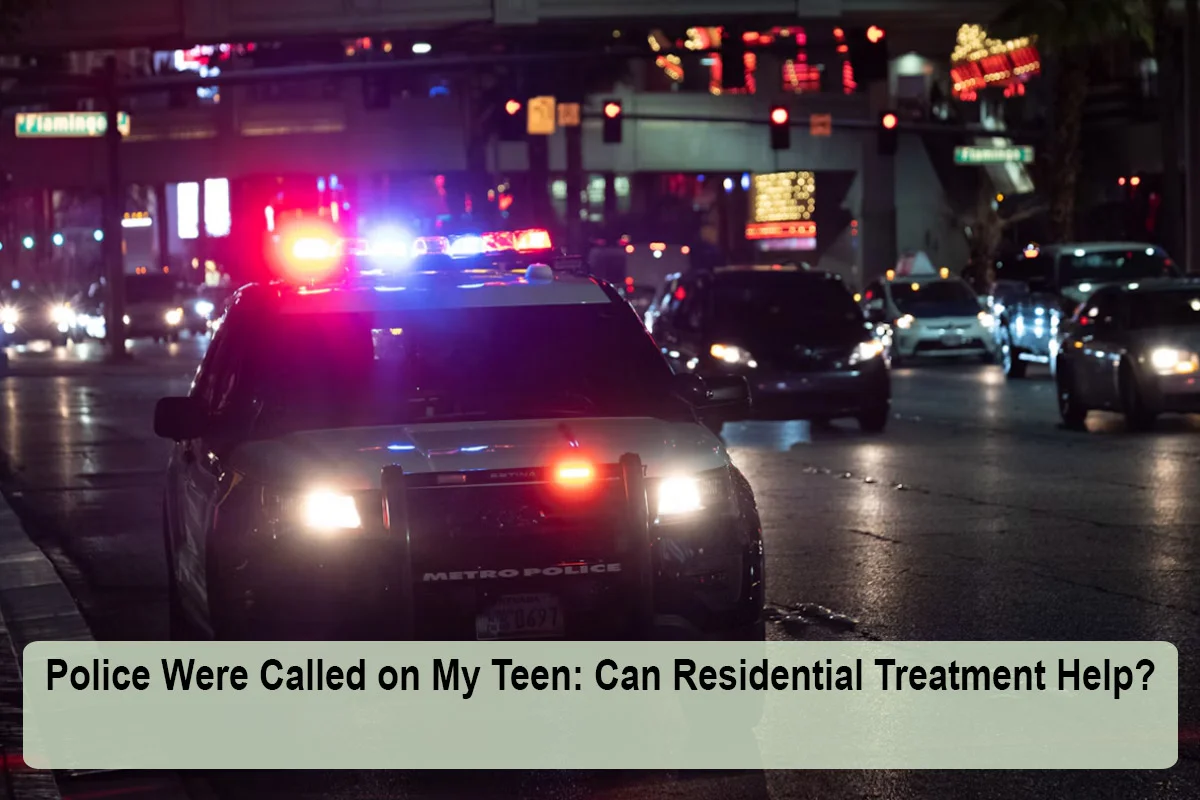
The argument escalated faster than anyone expected. A door was broken, maybe someone was pushed, maybe your son ran out into the night or threatened to hurt himself. Someone called the police. Now the officers have left, your son may be home or in custody, and you are asking a question thousands of parents ask every year: was this the moment to get real help, and could residential treatment be the answer?
It can be. Police involvement does not automatically mean your teen needs residential care, but it is often a sign that home, school and weekly therapy are no longer enough to keep everyone safe. This guide walks through what usually happens after police are called on a teen, the legal and diversion paths, how to decide whether residential treatment fits, what to look for in a program and how to talk to your son about it. If anyone is in danger right now, call 911. If your teen is talking about suicide, call or text the 988 Suicide and Crisis Lifeline.
Most families never imagined calling the police on their own child. It usually happens when a situation feels unsafe and there seems to be no other option. Common triggers include:
Underneath these crises there is often an untreated condition such as depression, trauma, ADHD, a substance use disorder, conduct disorder or explosive anger. Our guides on dealing with an unruly teen and violent behavior in teen boys cover safety planning before a crisis.
Not every crisis needs police. A Bureau of Justice Assistance field guide, How to Use 988 to Respond to Behavioral Health Crisis Calls, explains that routing every mental health crisis through 911 can bring police into situations that do not require them, and that 988 crisis counselors can de-escalate by phone and, in some areas, send mobile crisis teams. Calls involving violence or a public safety risk still go to law enforcement.
| Situation | Best first call |
|---|---|
| Someone is being hurt, there is a weapon, or a life is in immediate danger | 911 |
| Teen is suicidal or in emotional crisis but no one is in immediate physical danger | 988 (call, text or chat) |
| Teen needs in-person mental health help and your area has a mobile crisis team | 988 or your local crisis line, and ask about mobile crisis |
| Teen has run away | Local police non-emergency line, or 911 if they are in danger |
| Ongoing aggression you expect may recur | Teen's therapist or psychiatrist to build a crisis plan in advance |
If you call 911 for a mental health crisis, tell the dispatcher it is a mental health emergency involving a minor and ask whether officers trained in crisis intervention are available.
Officers will assess safety. Depending on the situation and local laws, they may calm things down and leave, take your teen to an emergency room for a mental health evaluation, or take your teen into custody if a crime may have been committed. If your teen is taken to the hospital, clinicians will decide whether inpatient psychiatric care is needed. Our guide to inpatient treatment for suicidal teens explains that process.
If charges are possible, you may be contacted by a juvenile probation officer or receive a court date. This is the time to speak with a juvenile defense attorney, gather records from therapists and schools, and ask whether diversion is an option. Also schedule an urgent appointment with your teen's mental health provider.
Cases may be dismissed, resolved through diversion, or move through juvenile court. Courts sometimes require counseling, community service or treatment, and in some cases treatment can be part of a court plan. At the same time, your family will be deciding what level of care your teen needs.
Juvenile diversion programs aim to redirect young people away from formal court involvement while still holding them accountable. According to the Office of Juvenile Justice and Delinquency Prevention's Model Programs Guide, diversion reflects the view that some risk-taking is normal in adolescence and that low-risk youth are poorly served by formal processing. Diversion may involve counseling, restitution, community service, education programs or mental health treatment.
Rules about juvenile records, sealing and expungement vary by state. Completing treatment does not automatically erase a record, but cooperation with treatment can influence how a case is handled. Ask a juvenile defense attorney how your state's laws apply.
After a police call, teens often feel ashamed, angry, betrayed or frightened, and parents may feel guilt, relief and grief all at once. Siblings who witnessed the incident may be scared. These reactions are normal. Avoid replaying the night as an accusation. Focus on safety, repair and next steps, and consider family therapy to help everyone process what happened.
Residential treatment provides 24-hour structure, daily therapy, schooling and supervision in a live-in setting, usually for weeks to months. It may be the right next step when several of these are true:
If your teen is safe at home and the incident was a one-time event, an intensive outpatient program or partial hospitalization may be enough. See our explainer on what an RTC is in mental health.
Choose carefully. Strong programs share these features:
Be cautious about programs built on punishment or isolation. MedlinePlus notes there is no research supporting boot camps or behavior modification schools for conduct problems and that treatment involving the family is more effective. Our article on where to send a defiant teenager compares placement options.
Many families call the police because, in the moment, they do not know what else to do. A written crisis plan, made with your teen's therapist during a calm period, gives you options:
Keep the plan where every adult in the home can find it.
Whether you are meeting with an attorney, probation officer, school or treatment program, organized records save time and strengthen your case for appropriate care:
Wait until everyone is calm. Lead with care rather than punishment: "I called because I was scared someone would get hurt, including you. I love you, and we need more help than we've had." Be honest about what happened and why you are considering treatment. Let him ask questions, involve him in visiting or researching programs where possible, and explain that the goal is to help him get his life back, not to send him away. Expect anger at first; many teens come to see treatment differently once they settle in.
Many commercial insurance plans and some Medicaid programs cover residential mental health or substance use treatment when it is medically necessary. Ask programs to verify benefits, and see how to verify insurance benefits. Most programs allow scheduled calls and visits and include family therapy, though phones may be restricted early in treatment.
A police call is a turning point, not the end of the story. Get legal advice if charges are possible, ask about diversion, secure your home, and get a professional evaluation to decide the right level of care. If your teen's behavior is repeatedly unsafe or outpatient help has not worked, a licensed, family-centered residential program can provide the structure and therapy needed to change direction. Compare residential treatment, anger treatment and programs for teen boys, search FindTreatment.gov, or call the SAMHSA National Helpline at 1-800-662-4357. Watch for the warning signs of suicide during this stressful time, and call or text 988 if they appear.
This article was reviewed by the RehabsNearMe Editorial Team for accuracy, clarity, and relevance. Information may be sourced from publicly available treatment resources, government agencies, and healthcare references where applicable.
Last reviewed: November 2026
Resources
 Resources
 Resources
 Resources