
 Resources
Teen Avoids Family Outings Due to Low Mood: What Parents Can Do
Published On 02-11-2026
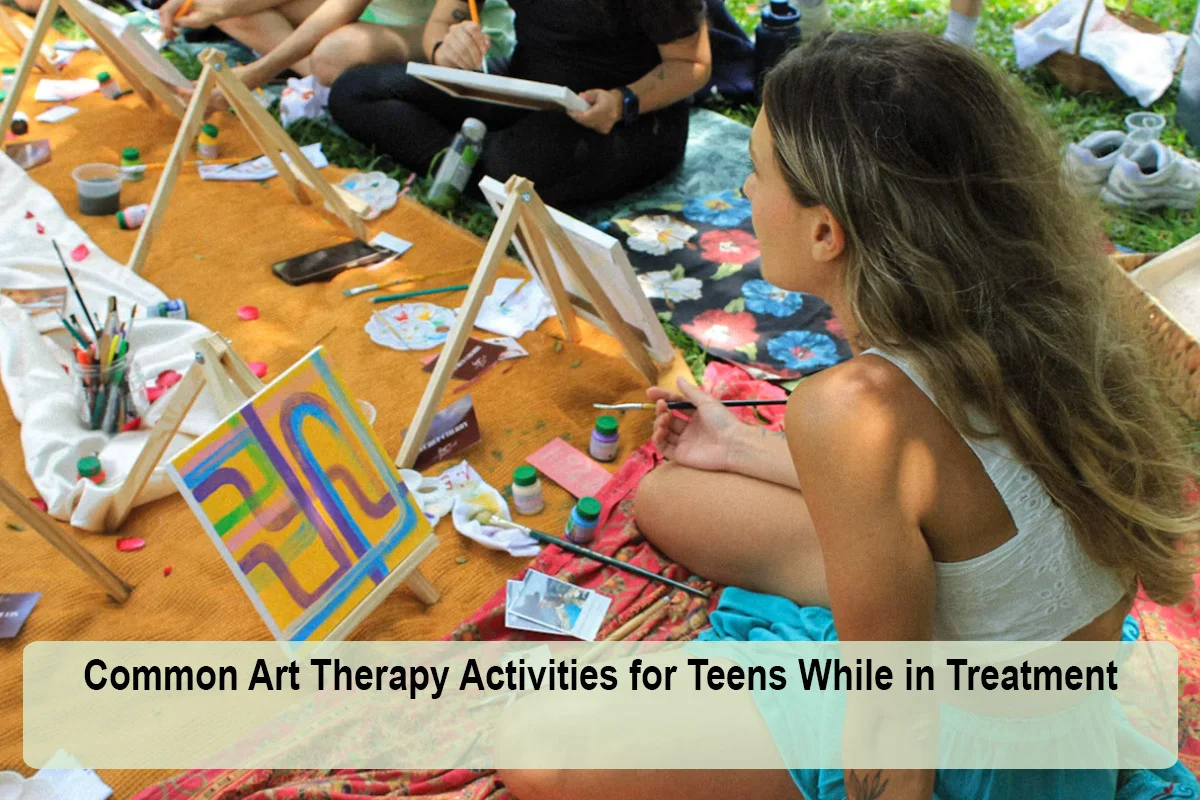
When your teen enters a treatment program, you may notice "art therapy" on the weekly schedule and wonder what it actually involves. Is it just a craft break between serious sessions? Will your teen really get anything out of drawing? For many teens in treatment, art therapy turns out to be one of the most meaningful parts of their day. It gives them a way to express what they cannot yet say out loud, practice coping skills with their hands and see their progress on paper.
This guide explains common art therapy activities for teens while in treatment, organized by the stage of treatment and the goal each activity serves. It also covers what a session looks like, who leads it and what parents can expect. If you are looking for creative ideas to try at home or in a school setting, see our separate article on art therapy ideas for teens.
The American Art Therapy Association describes art therapy as a mental health profession that uses active art-making, the creative process and applied psychological theory within a psychotherapeutic relationship. That last part is key. Art therapy is not the same as an art class or a craft activity. A trained art therapist uses the process and the artwork to help a teen explore feelings, build skills and work toward treatment goals.
Your teen does not need any artistic talent. The focus is on the process and what it reveals, not on making something beautiful.
In the US, the Art Therapy Credentials Board grants the Registered Art Therapist (ATR) credential and the Board Certified Registered Art Therapist (ATR-BC) credential, which requires an active ATR and passing a national exam. When you are comparing programs, it is reasonable to ask whether art therapy is led by a credentialed art therapist or by other staff using art-based activities. Both can be helpful, but they are not the same.
Most programs, whether residential, partial hospitalization or an intensive outpatient program, move through rough stages. Art therapy activities often match each stage.
| Stage | Main goals | Common art therapy activities |
|---|---|---|
| Early treatment (first days and weeks) | Safety, trust, emotional expression | Feelings color wheel, safe place drawing, scribble drawing, name or identity collage |
| Middle treatment | Exploring underlying issues, trauma, relationships | Mask making, timeline of life events, family drawing, inner critic portrait |
| Later treatment and discharge planning | Coping skills, identity, relapse prevention, hope | Coping skills toolbox, bridge drawing, future self portrait, relapse prevention map |
Teens assign colors to different emotions and fill a circle to show how much of each they feel today. Repeated over weeks, it becomes a visual mood tracker and helps teens build emotional vocabulary.
Teens draw or paint a place, real or imagined, where they feel completely safe. The image becomes a grounding tool they can picture during distress. This is often one of the first activities in trauma-informed programs.
On the outside of a mask, teens show how others see them or the face they show the world. On the inside, they show what they really feel. This is a powerful way to explore the gap between appearance and reality, which is common in teens with depression, eating disorders or substance use.
Teens map important events in their lives with images and symbols. The timeline helps them and their therapist see patterns, losses, traumas and strengths. It is usually done carefully, with the therapist pacing how much detail to include.
Teens draw their harsh inner voice as a character, then draw a supportive counterpart. Giving the critic a form makes it easier to challenge. It pairs well with skills from cognitive behavioral therapy and our guide on teen self-hate talk.
Teens represent their family using people, animals or shapes. Size, distance and placement often reveal how they experience family relationships. These drawings can open conversations in family therapy.
Teens design a box, vault or other container to "hold" overwhelming thoughts and memories between sessions. This helps teens in trauma work manage what comes up.
Teens decorate a real box and fill it with cards, images and objects representing their coping skills: breathing techniques, people to call, calming activities. They take it home at discharge.
Teens draw a bridge from where they are now to where they want to be, adding obstacles and supports along the way. It is useful for discharge and relapse prevention planning.
Teens imagine themselves a year or five years from now and create an image of that person. This builds hope and motivation, especially for teens who struggle to picture a future.
Teens in a group each contribute to one large piece, often around a shared theme like recovery or strength. Group murals build connection, communication and a sense of belonging.
Working with clay engages the body and can be calming or a safe outlet for anger. Teens might sculpt a feeling, a support person or an obstacle they are working to overcome.
| Treatment focus | Activities often used |
|---|---|
| Depression | Feelings color wheel, future self portrait, gratitude collage |
| Anxiety | Safe place drawing, mandala coloring, worry monster drawing |
| Trauma | Container drawing, safe place, carefully paced life timeline |
| Substance use | Mask making, relapse prevention map, bridge drawing |
| Self-harm | Coping skills toolbox, emotion mapping on a body outline, inner ally drawing |
| Eating disorders | Mask making, identity collage, inner critic portrait, often alongside body image therapy |
Sessions in treatment programs often last about an hour and may be individual or group-based. A typical session includes:
Art therapy often works alongside other experiential approaches such as music therapy, psychodrama and experiential therapy, as well as core therapies like DBT.
The skills teens practice in art therapy do not have to end when treatment does. Help your teen set up a small art kit at home with a sketchbook, markers or paints. Encourage a quick feelings drawing or a few minutes of mandala coloring when stress builds. If your teen continues outpatient therapy, ask whether an art therapist is available. Avoid analyzing or critiquing what your teen makes; the goal is expression, not a finished product.
Programs serving adolescents that list art therapy can be found by browsing our art therapy page and programs for adolescents. Adolescent programs include Nexus Teen Academy Oak, Polaris Teen Center and Hillcrest Adolescent Treatment Center; confirm which therapies each offers. You can also search FindTreatment.gov or call the SAMHSA National Helpline at 1-800-662-4357. If your teen is in crisis, call or text the 988 Suicide and Crisis Lifeline.
Common art therapy activities for teens while in treatment, from safe place drawings and mask making to coping skills toolboxes and future self portraits, give teens a way to express, process and practice what traditional talk therapy sometimes cannot reach. Led by a trained therapist and tied to treatment goals, art therapy is a real therapeutic tool, not just a break in the schedule. Ask programs how they use it, respect your teen's privacy about their art and help them carry the skills home.
This article was reviewed by the RehabsNearMe Editorial Team for accuracy, clarity, and relevance. Information may be sourced from publicly available treatment resources, government agencies, and healthcare references where applicable.
Last reviewed: November 2026
Resources
 Resources
 Resources
 Resources