
 Resources
Teen Avoids Family Outings Due to Low Mood: What Parents Can Do
Published On 02-11-2026
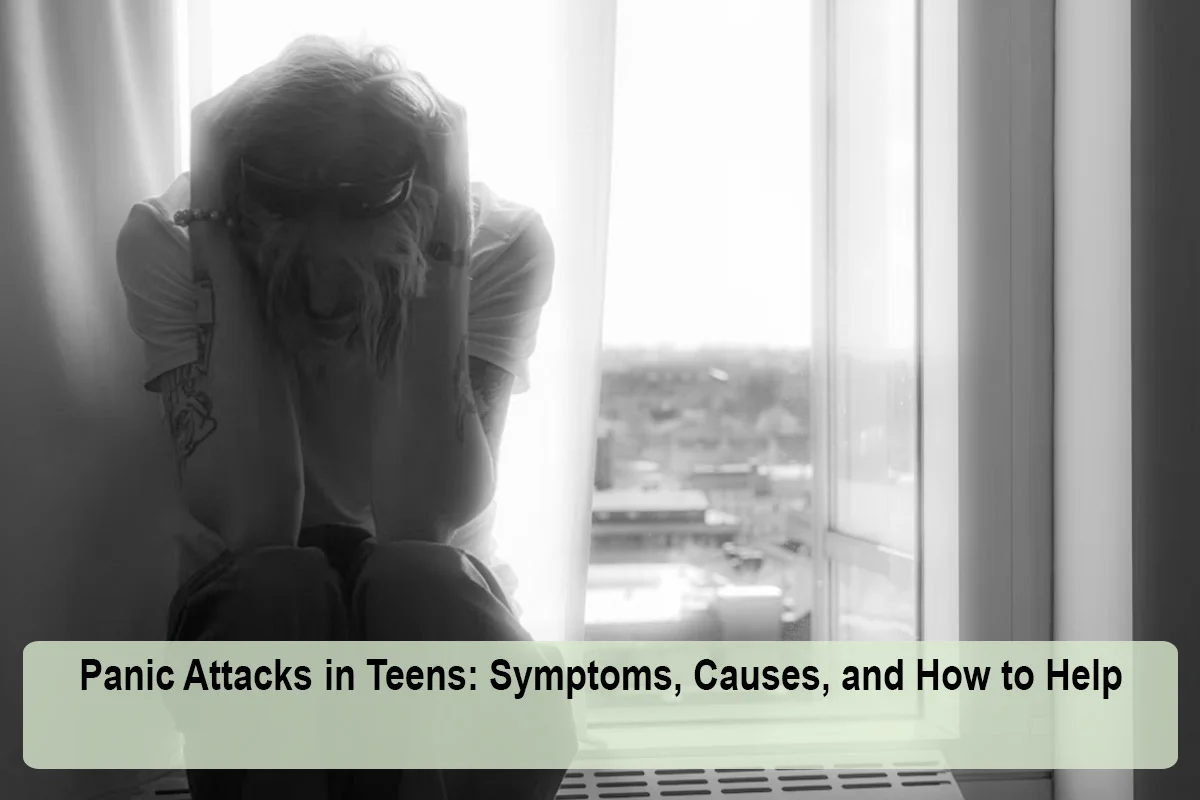
Your teen suddenly grabs their chest, can't catch their breath and says they think they are dying. Their heart is pounding, they are shaking and sweating, and nothing you say seems to reach them. Then, after a while, it passes, leaving them exhausted and scared it will happen again. If you have witnessed something like this, your teen may have had a panic attack. Panic attacks in teens are frightening for everyone involved, but they are also very treatable, and there is a lot parents can do in the moment and over the long term.
This guide explains what a panic attack is, the physical and emotional symptoms, common causes, what to do and what not to do during an attack, and the treatments that help prevent future ones. If your teen has chest pain or trouble breathing for the first time, get medical care to rule out other causes. If they talk about suicide, call or text the 988 Suicide and Crisis Lifeline.
The National Institute of Mental Health describes panic attacks as sudden periods of intense fear. They often come on quickly, sometimes with an obvious trigger and sometimes out of nowhere, and they usually build to a peak within minutes before easing. A single panic attack is not a disorder. Many teens have one or two during stressful periods.
Panic disorder is diagnosed when a person has repeated, unexpected panic attacks and spends a lot of time worrying about having another one or changes their life to avoid them. According to NIMH, an estimated 2.3% of US adolescents ages 13 to 18 have had panic disorder, including 2.6% of girls and 2.0% of boys. Panic attacks also occur alongside other anxiety disorders, which affect an estimated 31.9% of adolescents.
NIMH lists these possible panic attack symptoms:
Teens may also describe tingling, chest tightness, feeling detached from their body or surroundings, or fear of "going crazy." Because the symptoms are so physical, many teens and parents first think it is a heart or breathing problem. A doctor's visit after the first attack is wise to rule out medical causes.
| Feature | Panic attack | General anxiety or stress | When to call 911 |
|---|---|---|---|
| Onset | Sudden, peaks within minutes | Builds gradually with worries | Symptoms do not ease, or worsen |
| Intensity | Overwhelming fear, feeling of doom | Uncomfortable but manageable | Fainting, confusion, severe chest pain |
| Body symptoms | Racing heart, shortness of breath, shaking | Muscle tension, restlessness, stomach upset | Blue lips, can't speak, injury |
| Duration | Usually passes within a short time | Can last hours or days | Any concern about drugs or overdose |
Anxiety and panic tend to run in families. Teens with a parent or sibling who has an anxiety disorder may be more vulnerable. Differences in how the brain responds to threat also play a role.
Ongoing conflict, divorce, loss or traumatic experiences can keep a teen's stress system on high alert. See teen trauma signs and effects.
Tests, grades, college applications and heavy workloads are common triggers. Panic can start in testing situations and then spread to school generally.
Fear of judgment, bullying, social media conflict and relationship problems can trigger panic, especially in teens with social anxiety. See teen avoids parties and social events.
Caffeine, energy drinks, nicotine and cannabis can trigger or worsen panic in some teens. According to the FDA, energy drinks can contain from 54 to 328 milligrams of caffeine per 16 ounces. Withdrawal from substances can also bring on panic-like symptoms.
Sleep loss makes the nervous system more reactive. See teen can't get out of bed for the role of sleep.
Your calm is contagious. Say simply, "I think this is a panic attack. It's scary, but it will pass. I'm right here."
Breathe with your teen: in through the nose for 4, out slowly through the mouth for 6 to 8. A longer exhale helps calm the body. Avoid telling them to take big deep gulps, which can make dizziness worse.
Help your teen name five things they can see, four they can feel, three they can hear, two they can smell and one they can taste. Holding something cool or textured can also help anchor attention.
Have your teen tense their hands or shoulders for a few seconds, then release, noticing the difference.
Reduce noise, lights and crowds. Do not force your teen to leave if moving feels harder.
Remind your teen that panic peaks and then fades. Afterward, offer water and rest.
If your teen has a prescribed medication for panic, follow the doctor's instructions. Our guide to meditation techniques for teens includes breathing and grounding exercises they can practice between attacks.
| Avoid | Try instead |
|---|---|
| "Calm down, you're overreacting." | "This feels awful. You're safe, and it will pass." |
| Firing off advice or forcing them to relax | Breathing alongside them quietly |
| Panicking yourself | Keeping your voice slow and low |
| Minimizing it later: "It was nothing." | "That was really hard. Let's figure out what helps." |
| Letting them avoid everything that might trigger panic | Gradually facing situations with support |
Once your teen has calmed down, talk about what happened in a reassuring, curious way. Explain that panic is the body's alarm system going off at the wrong time: the racing heart and fast breathing are the same reactions the body uses to escape danger, even though no real danger is present. Understanding this can make the next attack less frightening. Ask what was happening before it started, how it felt and what helped. Make a simple plan together for next time, such as a breathing pattern, a grounding phrase and a person or place to go.
After a panic attack, many teens start avoiding the place or situation where it happened, such as a classroom, the bus, a store or a sports game. Avoidance brings short-term relief but teaches the brain that the situation is dangerous, which can make panic spread. Over time, some teens begin avoiding more and more places. With a therapist's guidance, gradually returning to avoided situations is one of the most effective ways to break the cycle.
Panic attacks often happen at school, where teens feel trapped and worry about being seen. Work with the school counselor on a plan: a pass to step out, a quiet space, a trusted adult, permission to carry water and, if needed, accommodations for tests through a 504 plan. Make sure staff know what a panic attack looks like so they respond calmly rather than treating it as misbehavior or a medical emergency every time.
Cognitive behavioral therapy is a first-line treatment for panic. It teaches teens that panic symptoms are uncomfortable but not dangerous, helps them challenge catastrophic thoughts and uses gradual exposure to feared sensations and situations so avoidance shrinks. In an NIMH-funded trial of young people with anxiety disorders, 60% improved with CBT alone and 81% with CBT plus medication, compared with 24% on placebo.
For moderate to severe panic, a psychiatrist may recommend an SSRI antidepressant. These require close monitoring in young people. Fast-acting sedatives such as benzodiazepines carry an FDA boxed warning about misuse and dependence and are generally used with caution in teens. See teen anxiety medications for more detail.
Consistent sleep, regular exercise, balanced meals and cutting back on caffeine and energy drinks lower baseline anxiety.
Breathing, grounding and mindfulness work best when practiced daily, not just during panic.
Seek help if your teen has repeated panic attacks, avoids school, activities or places out of fear of panic, worries constantly about the next attack, uses substances to cope, or shows signs of depression. Learn more about anxiety treatment. When panic is severe or combined with other conditions, an intensive outpatient program or partial hospitalization can provide daily support. You can browse programs for adolescents or teen programs such as Polaris Teen Center and Hillcrest Adolescent Treatment Center; confirm services and ages. You can also search FindTreatment.gov or call the SAMHSA National Helpline at 1-800-662-4357.
Ethan, 16, had his first panic attack during a chemistry test. He felt his chest tighten, his hands tingle and was sure he was having a heart attack. The school nurse called his parents, and a pediatrician found nothing wrong with his heart. Over the next month, Ethan had three more attacks and began skipping chemistry. A therapist explained how panic works and taught him slow breathing and grounding. Together they practiced bringing on mild panic sensations, such as running in place to raise his heart rate, so his body learned they were safe. With a school plan that let him step into the hallway if needed, Ethan returned to class. Within a few months his attacks had become rare, and he no longer feared them the way he once did.
Watching your child panic can trigger your own fear. Practice the same breathing and grounding skills so you can model calm. Talk with your partner, a friend or a therapist about your worries, and remember that panic attacks, while frightening, are very treatable.
Panic attacks in teens are sudden waves of intense fear with powerful physical symptoms, and they can make teens feel like something is terribly wrong. Stay calm, slow the breathing, use grounding and wait it out together. Rule out medical causes after a first attack, avoid letting fear shrink your teen's life, and get CBT-based treatment if attacks repeat. With the right help, most teens learn that panic is survivable and manageable.
This article was reviewed by the RehabsNearMe Editorial Team for accuracy, clarity, and relevance. Information may be sourced from publicly available treatment resources, government agencies, and healthcare references where applicable.
Last reviewed: November 2026
Resources
 Resources
 Resources
 Resources