
 Resources
Teen Avoids Family Outings Due to Low Mood: What Parents Can Do
Published On 02-11-2026
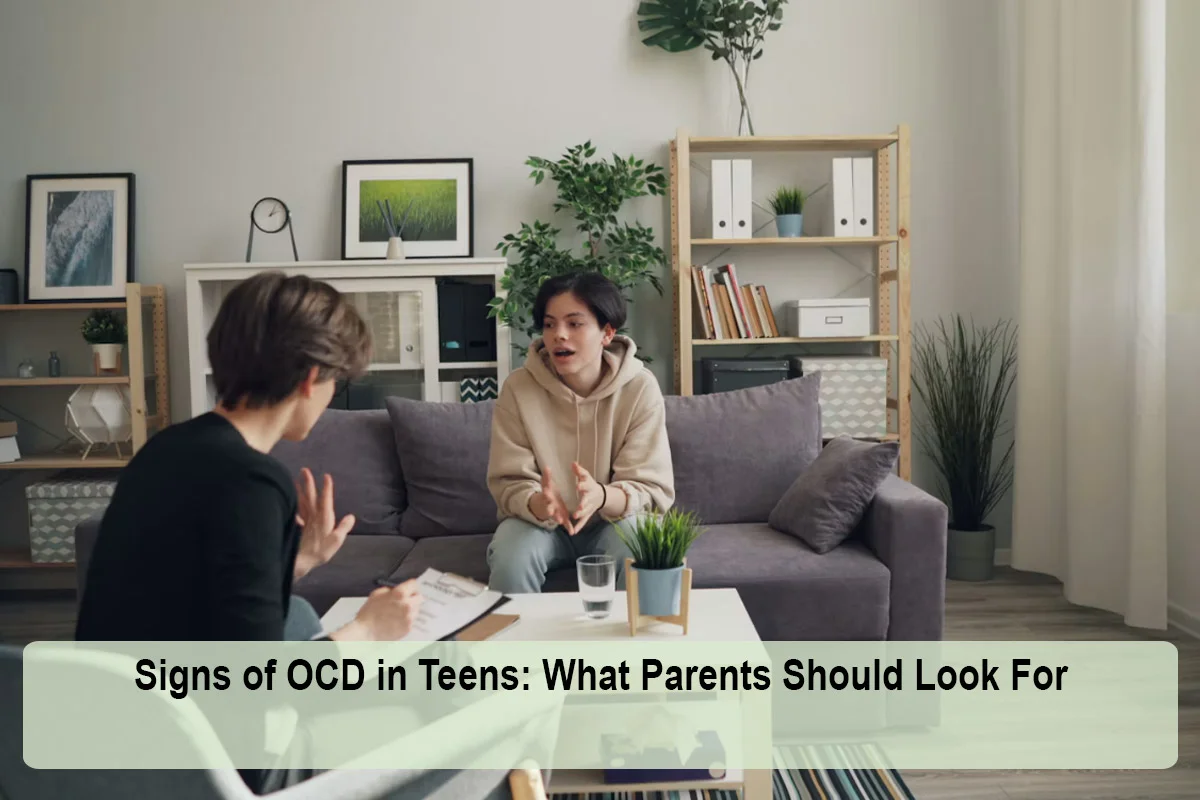
Your teen washes their hands until the skin cracks. They check the stove and door locks again and again before bed. Homework takes hours because they erase and rewrite until it looks "just right." They ask you the same reassuring question ten times a night. You may have assumed these were quirks or perfectionism, but when habits like these take up a lot of time, cause distress and get in the way of daily life, they may be signs of obsessive-compulsive disorder (OCD).
This guide covers the behavioral, mental, physical, social and school-related signs of OCD in teens, how OCD differs from ordinary habits and perfectionism, and how early support and treatment can help. If your teen is in crisis or talks about suicide, call or text the 988 Suicide and Crisis Lifeline.
The National Institute of Mental Health describes OCD as a condition involving obsessions, which are unwanted thoughts that keep coming back, and compulsions, which are repeated, excessive behaviors. Teens usually perform compulsions to reduce the anxiety that obsessions cause, but the relief is short-lived, so the cycle repeats. NIMH notes that OCD symptoms can begin at any time but usually start between late childhood and young adulthood.
OCD is not rare. NIMH survey data estimate that about 1.6% of US adults will have OCD at some point in their lives, with an average age of onset of 19, which means many cases begin during the teen years, as reported in NIMH prevalence data.
Obsessions are the thoughts, images or urges that trigger anxiety. Teens often feel embarrassed and hide them. Common themes include:
Intrusive thoughts are not wishes or intentions. Teens with OCD are usually horrified by them, and that distress is what drives the compulsions.
Excessive handwashing, very long showers, avoiding touching doorknobs or shared objects, or using large amounts of soap and sanitizer.
Checking locks, appliances, backpacks, texts or homework over and over, sometimes a specific number of times.
Arranging objects until they feel right, becoming very upset if items are moved, or needing to do things evenly on both sides.
Asking the same questions repeatedly ("Are you sure it's clean?" "Did I lock it?") or confessing small things to feel relief.
Rereading, rewriting, retracing steps or repeating actions until it "feels right."
Distress or anger when routines are interrupted, and spending a long time on bedtime or morning rituals.
Some compulsions are invisible: silently praying, counting, reviewing or "canceling out" bad thoughts with good ones.
Teens may avoid sleepovers, sports, shared equipment or friends' homes because of contamination fears or rituals they cannot perform in front of others.
Homework that takes hours, unfinished tests from rereading, avoiding bathrooms or shared supplies, and trouble concentrating because of intrusive thoughts. See teen stopped turning in easy assignments.
Families often get pulled into rituals: answering the same questions, washing extra, waiting while the teen checks. This is called family accommodation. It comes from love, but over time it can strengthen OCD.
| Feature | Normal habits or preferences | Perfectionism | Possible OCD |
|---|---|---|---|
| Why they do it | Preference or routine | Wants high-quality results | To relieve anxiety from an obsession |
| How it feels | Neutral or satisfying | Pressure to succeed | Distressing, feels forced |
| Time spent | Minimal | Extra time on important work | Large amounts of time daily |
| If interrupted | Mild annoyance | Frustration | Intense anxiety or panic |
| Impact on life | None | Some stress | Interferes with school, sleep, friends or family |
If your teen's main struggle is fear of failure, see teen obsession with failures.
Many teens recognize that their thoughts and rituals are excessive or do not make sense, but they still feel unable to stop. This awareness often leads to shame and secrecy, so teens may hide rituals for a long time. Others have less insight and truly believe the rituals are necessary. Either way, a calm, nonjudgmental approach makes it more likely your teen will open up.
Describe what you see without criticism: "I've noticed washing your hands seems to take a long time and makes your skin sore. Does it feel hard to stop?"
A pediatrician can screen for OCD and refer you to a psychologist or psychiatrist experienced with adolescent OCD. They will also check for related conditions such as anxiety, depression, tics, ADHD and eating disorders.
With a therapist's guidance, families slowly stop participating in rituals, such as answering the same reassurance question repeatedly, while expressing confidence that the teen can handle the anxiety.
Ask the school counselor about a 504 plan if OCD affects learning. Supports can include extra time on tests, reduced rewriting requirements and access to a counselor during difficult moments.
In younger teens, OCD often shows up as visible rituals at home, such as washing, checking or ordering, along with frequent reassurance questions to parents. Older teens are often better at hiding rituals, so signs may appear as unexplained lateness, very long showers, homework that takes hours, avoidance of certain places or activities, or exhaustion. Older teens may also struggle with intrusive thoughts about harm, morality, relationships or identity that they are too embarrassed to share. If your teen suddenly seems anxious, secretive and slow at everyday tasks, gently ask whether they have thoughts that get stuck.
Hannah, 14, began taking 45-minute showers and washing her hands until they cracked. She avoided friends' houses, said door handles were "gross" and asked her mom several times a night whether her hands were clean. Her parents thought she was just particular until her grades dropped because she kept rewriting assignments. A psychologist diagnosed OCD and began ERP. Hannah practiced touching a doorknob and waiting before washing, starting with short delays and building up. Her parents learned to respond to reassurance questions with support instead of answers: "I know that worry feels big. I think you can handle it." After several months, her rituals had shrunk dramatically, and she was spending time with friends again.
OCD often occurs alongside other conditions, including anxiety disorders, depression, ADHD, tic disorders and eating disorders. Depression can develop when OCD consumes a teen's time and isolates them. A thorough evaluation looks for these so treatment addresses the whole picture. If your teen seems hopeless or talks about self-harm, seek help right away.
| Try saying | Avoid saying |
|---|---|
| "That sounds really exhausting. You're not alone in this." | "Just stop doing it." |
| "OCD is a health condition, not your fault." | "You're being ridiculous." |
| "I know the anxiety is hard. I believe you can get through it." | "Fine, I'll check it again for you." |
| "Let's find someone who knows how to help with this." | "Everyone's a little OCD." |
NIMH lists talk therapy, medication and, for some adults, brain stimulation as treatment options, noting that while there is no cure, treatment can help people manage symptoms.
When OCD is severe, an intensive outpatient program, partial hospitalization or residential treatment with ERP expertise may be needed. You can browse anxiety and OCD-related treatment, programs for adolescents, or teen programs such as Polaris Teen Center and Hillcrest Adolescent Treatment Center; ask specifically whether they offer ERP and serve your teen's age. You can also search FindTreatment.gov or call the SAMHSA National Helpline at 1-800-662-4357.
Parenting a teen with OCD can be draining, especially when rituals affect the whole household. It is common to feel frustrated, guilty or trapped in accommodating behaviors. Learning about OCD, joining a parent support group and working with your teen's therapist on a plan to reduce accommodation can ease the strain. Celebrate small wins, like a shorter shower or one unanswered reassurance question, because progress with OCD often comes in small steps.
Signs of OCD in teens include time-consuming washing, checking, ordering, repeating and reassurance-seeking, along with intrusive thoughts that cause intense distress. Physical signs like raw hands and lost sleep, and social and school problems, often follow. OCD is not a quirk or a phase, and teens rarely outgrow it without help. Respond with empathy, avoid getting pulled into rituals, work with the school and seek an evaluation. With ERP and support, many teens with OCD regain control of their time and their lives.
This article was reviewed by the RehabsNearMe Editorial Team for accuracy, clarity, and relevance. Information may be sourced from publicly available treatment resources, government agencies, and healthcare references where applicable.
Last reviewed: November 2026
Resources
 Resources
 Resources
 Resources