
 Resources
Teen Thinks Therapy Doesn't Work? How Parents Can Help
Published On 31-10-2026
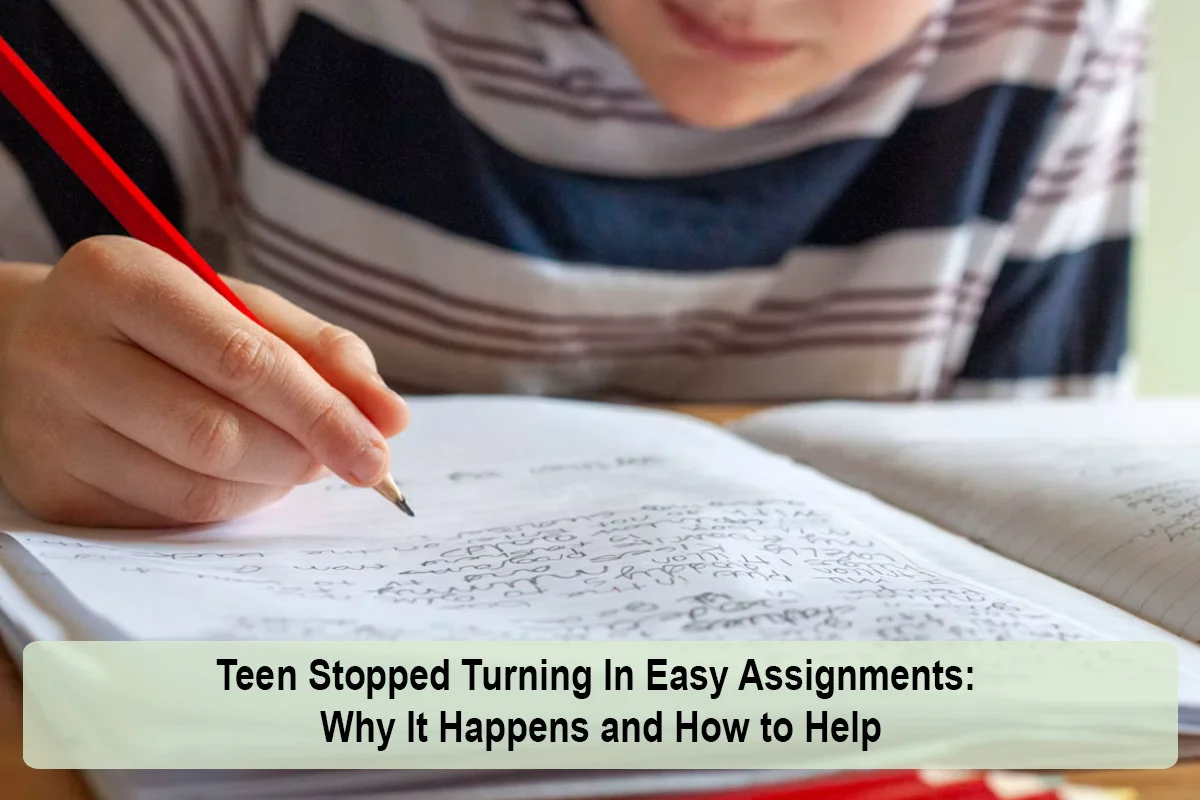
You open the school portal and see a row of zeros. Not on the hard final project, but on worksheets, short reading responses and five-point homework checks. Assignments your teen could finish in ten minutes, and sometimes did finish, sit in a backpack or never get uploaded. When you ask, you get "I forgot," "It's pointless" or "I'll do it later." It is maddening, because the work is easy. That is exactly the clue. When a teen stopped turning in easy assignments, the problem is rarely ability. It is usually something getting in the way of starting, finishing or submitting.
This guide walks through the most common reasons capable teens stop turning in simple work, how to figure out which one applies to your teen, what to say and how to build a plan with school. If your teen seems hopeless or talks about suicide, call or text the 988 Suicide and Crisis Lifeline.
Missing easy work feels like defiance or laziness, but it is more often a symptom. Here are the most common causes.
Executive functions are the brain skills that manage planning, organizing, starting and finishing tasks. Teens with weak executive function may understand the material perfectly but lose track of due dates, forget to upload, or lose the paper between home and class. The NIMH guide to ADHD lists missed deadlines, poor organization, forgetting assignments and losing items like backpacks and books among the signs of inattention, and notes these problems often continue into the teen years. About 7 million US children have been diagnosed with ADHD, according to the CDC, and some are not diagnosed until middle or high school when demands increase. Learn more on our ADHD treatment page.
Depression drains energy and makes small tasks feel huge. A depressed teen may think "What's the point?" about even a two-minute assignment. NIMH's teen depression guide lists dropping grades, fatigue and loss of interest as common signs. If this sounds familiar, see teen depressed at home and teen anhedonia.
Some teens avoid work because opening the assignment triggers worry. Once a few are missing, the pile itself becomes frightening, and avoiding the portal feels safer than facing it. Anxiety is extremely common; NIMH estimates that 31.9% of adolescents will have an anxiety disorder.
It sounds backwards, but perfectionistic teens sometimes turn in nothing because nothing they do feels good enough. If it is not perfect, they would rather not submit it. Our article on teen obsession with failures explores this pattern.
Bright teens may see simple assignments as busywork and skip them, not realizing how quickly zeros add up. This is the most benign cause, but it still needs a plan.
Too many activities, a job, family stress or caring for siblings can leave no capacity for even small tasks. See teen gets overwhelmed by simple tasks.
Bullying, friendship drama, cannabis or alcohol use and chronic sleep loss can all sap focus and motivation. Only about 24% of high schoolers get eight or more hours of sleep on school nights, according to CDC data.
| What you notice | Possible cause | First step |
|---|---|---|
| Work is done but not submitted; lost papers | Executive function or ADHD | Submission checklist, organization support, evaluation |
| Low mood, tiredness, "what's the point" | Depression | Mental health evaluation |
| Avoids even looking at the portal; stomachaches | Anxiety | Break tasks down, gentle exposure, therapy |
| Rewrites and deletes; nothing feels good enough | Perfectionism | "Good enough" targets, time limits |
| Does big projects but skips small ones | Boredom with busywork | Show grade impact, set a routine |
| Sudden change with new friends or secrecy | Substance use or social trouble | Open conversation, screening |
Approach this as a puzzle you are solving together, not a trial. Teens who feel accused tend to shut down or lie.
| Try saying | Avoid saying |
|---|---|
| "I noticed some easy assignments are missing. What's getting in the way?" | "You're just lazy." |
| "Is it starting, finishing or turning it in that's hard?" | "How can you not do something this simple?" |
| "You're clearly capable. I'm wondering if something else is going on." | "You'll never get into college like this." |
| "What would make it easier?" | "No phone until every grade is an A." |
Ask about mood, sleep, friends and stress, not just schoolwork. The real answer often comes from those questions.
Sit down with the portal and list every missing assignment. Seeing the actual number, often smaller than the teen feared, can reduce anxiety. Ask teachers which items can still be turned in for credit.
Sort by impact and effort. Start with quick wins that boost grades the most. Early success builds momentum.
Set a consistent homework time and place, with the phone in another room. Even 30 focused minutes a day can clear a backlog.
Many teens finish work but never upload it. End each homework session with a quick check: Is it submitted? Did the portal confirm?
Planners, phone reminders, timers and a visible weekly calendar support weak executive function. Some teens benefit from body doubling, which means working while a parent or friend sits nearby.
A short daily or weekly review of the portal works better than occasional big confrontations. Praise progress, not perfection.
As your teen succeeds, step back and let them take more ownership.
Reach out to teachers early. Ask whether late work is accepted, whether your teen participates in class, and whether they have noticed changes in mood or friendships. The school counselor can coordinate across classes. If ADHD, anxiety, depression or a learning difference is involved, ask about a formal plan. NIMH notes that schools may provide accommodations through a 504 plan or, for students who qualify for special education, an individualized education program. Common supports include extended time, reduced workload, check-ins with a staff member and help with organization and study skills. Our article on teen failing classes covers school collaboration in more depth.
The reasons behind missing easy work often shift with age. In middle school, the jump to multiple teachers, lockers and online portals can overwhelm teens whose organization skills have not caught up. Simple systems, such as one binder with color-coded folders and a single planner, often solve much of the problem. In early high school, heavier workloads and social pressures take center stage, and anxiety or depression may begin to show. In the later high school years, burnout, part-time jobs, college pressure and senioritis become common. A junior who suddenly stops turning in easy assignments after years of solid work deserves a closer look at mood, stress and substance use.
Monitoring a portal full of zeros can bring up frustration, fear about the future and even embarrassment. Try to separate your teen's worth from their grades, both for them and for yourself. Agree with your partner on one consistent approach so your teen is not caught between two sets of rules. If checking the portal makes you anxious, set a specific time each week to review it rather than refreshing it every day. Your calm consistency will do more good than constant reminders.
Noah, 15, had a B average until October, when his grades dropped to Ds. The portal showed 14 missing assignments, almost all short homework checks. His mom assumed he was gaming instead of working. When she sat with him and asked what was getting in the way, Noah admitted he usually did the work in his head during class but then forgot to write it down or upload it, and once a few were missing he stopped opening the portal at all because it made him feel sick. A pediatrician referred him for an evaluation, which found ADHD and anxiety. With a 504 plan, a nightly upload checklist and weekly sessions with a therapist, Noah cleared his backlog by the end of the semester.
Seek a professional evaluation if missing work is part of a broader change, such as withdrawal from friends, sleeping much more or less, persistent sadness or irritability, substance use, refusing school or talk of hopelessness. Our related guides on teen gives up on school and teen truancy cover what to do when the problem grows.
Treatment can make a big difference. Cognitive behavioral therapy helps with avoidance, anxiety and negative thinking, while ADHD treatment can improve focus and organization. Teens with co-occurring depression, anxiety or substance use may need an intensive outpatient program or programs that treat co-occurring conditions. For teens who need more structure, therapeutic boarding schools combine academics and treatment. Adolescent programs such as Nexus Teen Academy Oak list services for teens; confirm the program fits your teen's age and needs. You can also browse programs for neurodivergent teens, search FindTreatment.gov or call the SAMHSA National Helpline at 1-800-662-4357.
When a teen stopped turning in easy assignments, the work is not the problem; something is blocking it. Executive function struggles, ADHD, depression, anxiety, perfectionism, overwhelm and substance use are the usual suspects. Get curious instead of critical, take inventory together, build simple daily structure, partner with teachers and seek an evaluation if the pattern persists or comes with mood changes. Most teens can get back on track once the real obstacle is identified.
This article was reviewed by the RehabsNearMe Editorial Team for accuracy, clarity, and relevance. Information may be sourced from publicly available treatment resources, government agencies, and healthcare references where applicable.
Last reviewed: November 2026
Resources
 Resources
 Resources
 Resources